
Imperial Expansion
Part 2 — Imperial Overreach: When Expansion Outpaces Capacity

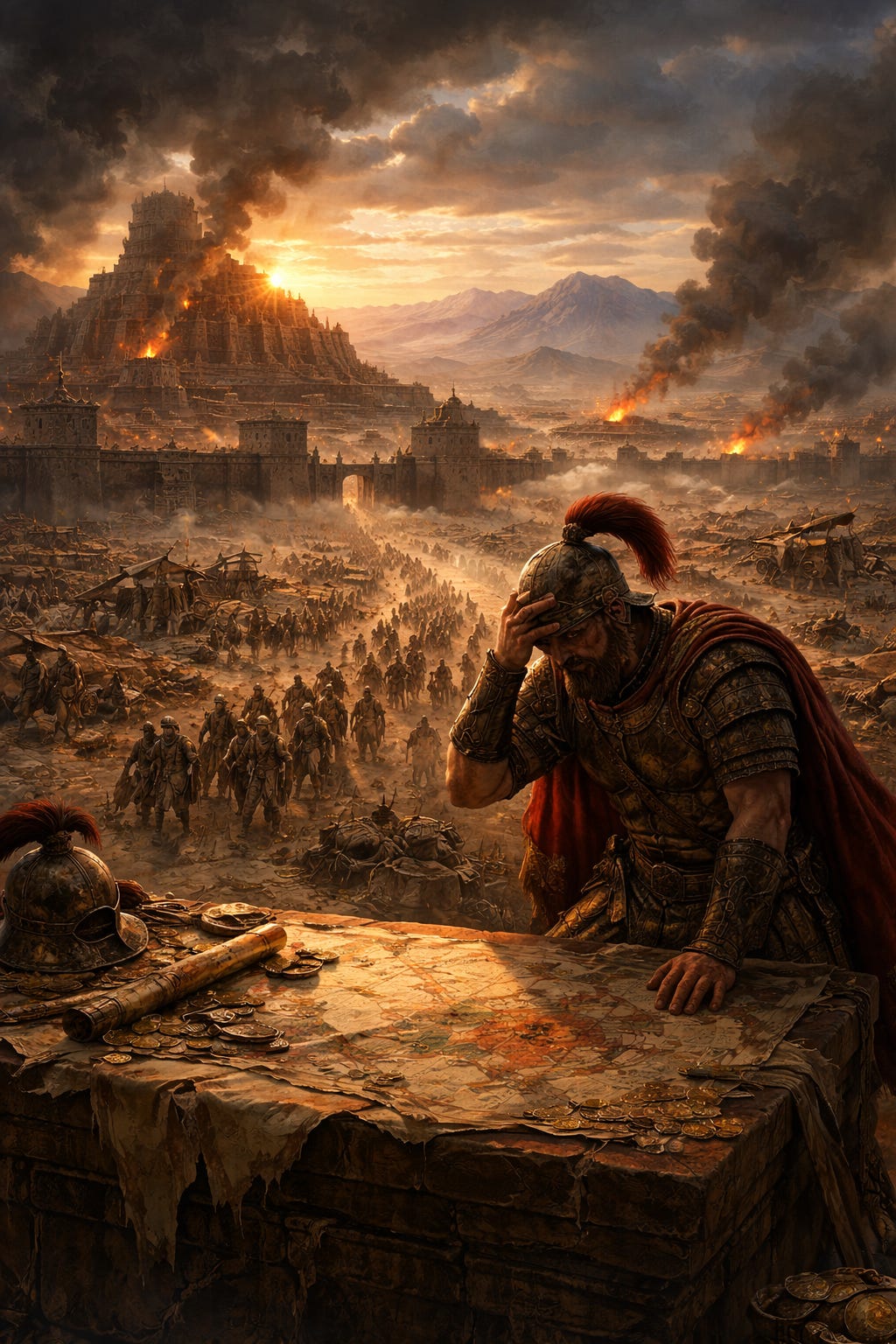
Imperial overreach is one of the oldest warnings in international relations. From early political thinkers to modern theorists, it appears as a recurring diagnosis: great powers rarely fall because they are too weak, but because they fail to recognize their own limits.
The problem is deceptively simple. SImperial tates expand beyond their capacity to sustain what they have acquired. What begins as strength—military success, territorial gain, resource accumulation—gradually transforms into strain. The empire becomes responsible for more than it can effectively control.
This is not a modern insight. By the 16th century, observers of the Spanish Empire were already warning that its rapid expansion carried long-term risks. The influx of wealth from the Americas created the illusion of unlimited capacity. In reality, it masked structural weaknesses—most notably inflation, dependency, and administrative overextension.
Overreach, however, is not simply a matter of miscalculation. It is often the result of inertia.
Once expansion begins, it creates systems that depend on its continuation. Military institutions grow in size and influence. Economic activity becomes tied to war production and territorial acquisition. Social expectations shift as well—soldiers, elites, and political actors begin to expect rewards, often in the form of land, wealth, or status derived from conquest.
This produces a feedback loop. Expansion sustains the system, and the system demands further expansion. To stop is not neutral—it is disruptive. A halt in growth risks economic contraction, political instability, and loss of prestige at the imperial center.
In this sense, empires do not always choose to continue expanding. They often feel that they cannot afford to stop.
Yet the material limits remain unavoidable. No state possesses infinite resources. There are only so many soldiers that can be deployed, only so much wealth that can be extracted, only so much territory that can be effectively governed. At a certain point, expansion ceases to increase security and begins to undermine it.
It is at this stage that perception begins to shift. What once appeared as overwhelming strength can start to resemble something closer to fragility—a kind of geopolitical façade. A Potemkin village on a grand scale.
This is often when empires experience their first meaningful reversals. Not necessarily at the hands of rival great powers, but from smaller states positioned along their periphery. These actors do not need to match imperial strength in total—they only need to exploit a weakness in one place at one time.
History shows this pattern repeatedly. Large empires, confident in their dominance, underestimate smaller opponents. They assume disparity in size guarantees victory. Instead, they encounter resistance that exposes the limits of their reach.
If the pattern is so visible, the question becomes unavoidable: why is it repeated?
Part of the answer lies in the psychology of power. Those who rise to positions of authority often possess a strong orientation toward achievement and recognition. Expansion offers both. It delivers tangible gains and symbolic prestige. The ability to say “no” to further opportunity requires a level of restraint that runs counter to the very traits that brought them to power in the first place.
This dynamic is not confined to monarchies. Even in systems that claim broader legitimacy, similar tendencies emerge. Leaders who are able to concentrate decision-making authority—whether formally or informally—often display the same expansionist impulses. The structure may differ, but the disposition remains.
As Louis XIV reportedly reflected near the end of his life, the pursuit of war and expansion can become an end in itself. What begins as strategy becomes habit; what begins as necessity becomes preference.
At the same time, expansion generates new dependencies. Each newly acquired territory introduces both resources and deficiencies. Empires gain access to wealth, but also inherit new logistical demands—supply chains, infrastructure, and defense obligations. Often, solving these problems requires further expansion to secure complementary resources.
The result is a second feedback loop: expansion creates needs that only further expansion appears to resolve.
By the time these dynamics are fully visible, it is usually too late. The empire is extended, committed, and structurally dependent on the very process that is weakening it.
This is why overreach is so dangerous. It is not simply a mistake that can be corrected. It is a condition that, once established, becomes difficult to reverse without triggering the very instability expansion was meant to prevent.
And it leads directly to the next problem.
If acquiring territory creates strain, and holding it requires constant effort, then the central question becomes unavoidable:
Not whether an empire can expand—but whether it can actually rule what it has taken.