
The Long Shadow
Beginning with World War I events alter the intellectual landscape.

Continued from
From Practical to Aspiration
·
Apr 28
The characteristic virtue of Englishmen is their power of sustained practical activity. They are incurious as to theory, … more interested in the state of the roads than in their place on the map. - R H Tawney
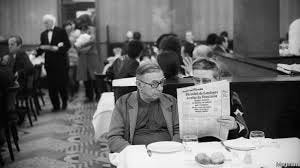
By the late 1940s sitting in a high-end Cafe it would be easy to find a conversation that began questioning whether or not Europe had really been that great. Increasingly the chattering classes held a distinctively negative view. Looking back over the last three decades certainly was not a romantic endeavor. But even beyond the ugly history of the first half of the century there was something of a more existential part.
For those beginning to say the modern era was far more violent and that the general person’s existence seemed to be becoming harsh it was hard to argue. The human cost of the two world wars as well as the economic uncertainty that had been unleashed certainly upset the ideals of the early 20th century of forever progress. Maybe modernity was not such a great thing.
One of the questions a number of people make is why left-wing principles like Marxism seem to keep reemerging regardless of how many times they fell out of favor. Even in the late 1940s a number of Marxists openly argued that the Soviet Union and other practical attempts had proven the idea was faulty. For a different brand of true believers that refuse to give up there was a different opportunity they now saw.
Classical liberalism without really knowing it, had entered into a stage of crisis. A belief system that largely left everyone to their own devices and believed that experience was the primary mode of ascertaining knowledge had been seen as one of the causes. Liberalism had peaked at something of a height during the 1900s and 1910s. Universal human progress seems to be at hand because of its success over the previous century and a half. The trouble was then looking at what the next 35 years produced.
For many left-wing thinkers that relied on forms of narrative as methodology for their theories it had seemed that liberalism inevitably had led to the disasters between 1914 and 1945. As a result it became far easier to argue that Marx’s point of liberal capitalism’s inevitable collapse had come to fruition.
(There was a catch we will get to in a moment).
If that legacy was one of increasing destruction and economic instability it became extremely difficult for those same liberals at the end of their life to try and defend what they had done.
By contrast, those on the left that refuse to admit they might be wrong not only had an opening but effectively had a clean slate on which to operate again. Whether your influence was mid 18th century liberal progressives, original Marxist, or state-centered pragmatists, all of them presented the ability to argue you could recreate how a society functioned. We could reimagine everything.
In 1950 saying that you could change how everything worked so that you didn’t have to worry about bad things like the last few decades was an overwhelmingly popular idea. It’s not hard to see why in most of the West, Western Europe specifically, Social Democratic parties not only became far more successful but outright dominant in most jurisdictions. By framing liberalism as having created those problems, one wanted to try and forget Europe’s recent history, and look for a new way of doing things.
Even England and the United States, which remained relatively conservative and pro-capitalist, still had to make a number of concessions to more left-wing ideas in order to retain stability.
Even for those that tried to use the argument that the left had a fairly precarious history on its own side, going back as far as the French revolution it didn’t mitigate what appeared to be liberalism’s own failures. Both sides were very capable of being able to accuse the other of simply being worse.
For a generation that had to see so many problems it was impossible to remember what things were like before the First World War. This landed those intellectuals that could try and argue for their own Utopia with a willing audience.
It’s hard to exaggerate the effect the two World wars and the depression had on academia and the intellectual class generally. Places where experimental data and evidence had reigned now turned into places where theory and trying to recreate new ideas rapidly overtook them. By the 1950s it would be fair to say that almost every University campus broadly became dominated not just by self-defined liberals. Most of them were of a new variety of far more progressive left liberal. Intellectual discourse was still persistent for the time being. Theories were still questioned and people disagreed from time to time. But the drift towards experimental society solutions had become the dominant center of the conversation.
Maybe most importantly the progressive left view of historical narratives leading to an inevitable social Utopia had taken up the primacy within methodology over enlightenment materialism.
Events themselves came to be the principal driver that intellectuals were able to free themselves from the burden of history. Instead of simply dreaming of it as those 50 years earlier it did, by mid-century it was a pretty appealing project to model things the way you wish they’d be rather than how they were. Practical restraints were removed.

If there was a catch, most populations had drifted left generally as far as their voting patterns; most hadn’t given up entirely on the basics of Western civilization. Intellectuals were far more motivated about reforming the cultures and entire structures of the societies they were looking at than society as a whole was.
On this front those that were trying to ascertain why World War I hadn’t produced massive revolutions as Marx had predicted came to the conclusion that society had to be prompted in order to get there.
World War I had started a process that carried out for 30 years and produced a long shadow which undermined liberalism’s dominant position. Now able to reassert left wing ideology over the intellectual and academic leadership, those on the left now sought to reform the rest of society through a top-down method. The left did redefine that a revolution would be inevitable under the right conditions. On this front the emerging cultural and neo marxists shifted and believed they needed to reconstruct society themselves.
This is an interesting analysis. It’s difficult to discern your ideological position though, perhaps that is intentional?